
Help Matchmaker: Enhancing Support Through Smart Triage
—
Engagement length: 5 months
Sector: Financial service
Team: Service Designer + PM + BA + Fronline working groups + Technolgy team
Object of design: Help services triage framework and logic & a pilot program
—
Help Matchmaker is a triage process and pilot initiative designed to connect superannuation members with the right level of support. By integrating a structured triaging mechanism into the frontline servicing team’s conversation framework, the program has enhanced how members receive assistance related to super and retirement.
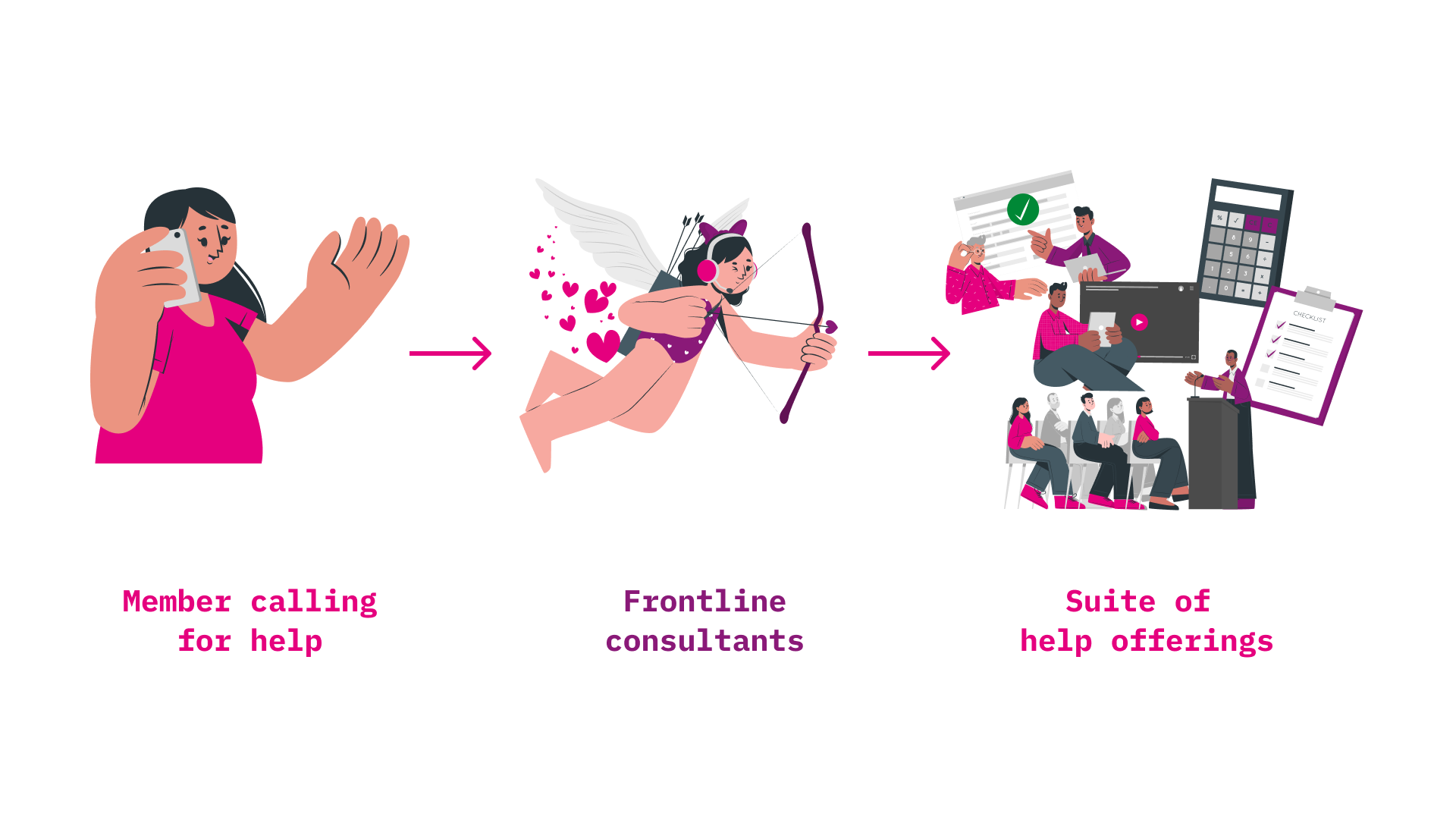
Navigating Complexity in Superannuation Support
Regulatory Restrictions
Frontline staff must adhere to strict regulations, limiting what they can communicate and recommend without specialised certifications.
Siloed Advice Structures
The organisation’s existing approach to financial advice is focused primarily on adviser-led solutions, but it is missing opportunities to connect members with self-help and non-adviser resources.
Member Uncertainty
Many members are unaware of the types of support available to them, making it difficult to self-navigate to the right help.
Problem to solve
How might we design a digital and human triaging system that accurately identifies a member’s needs and directs them to the right resources at the right time?
The Solution: Help Match
Design Objectives
Develop a structured triage logic based on a member’s age, life stage, financial needs, learning preferences, and superannuation topics of interest.
Translate conceptual logic into a usable tool for frontline agents during live service interactions.
Pilot and refine the process through real-life application, ensuring usability and effectiveness.
Approach
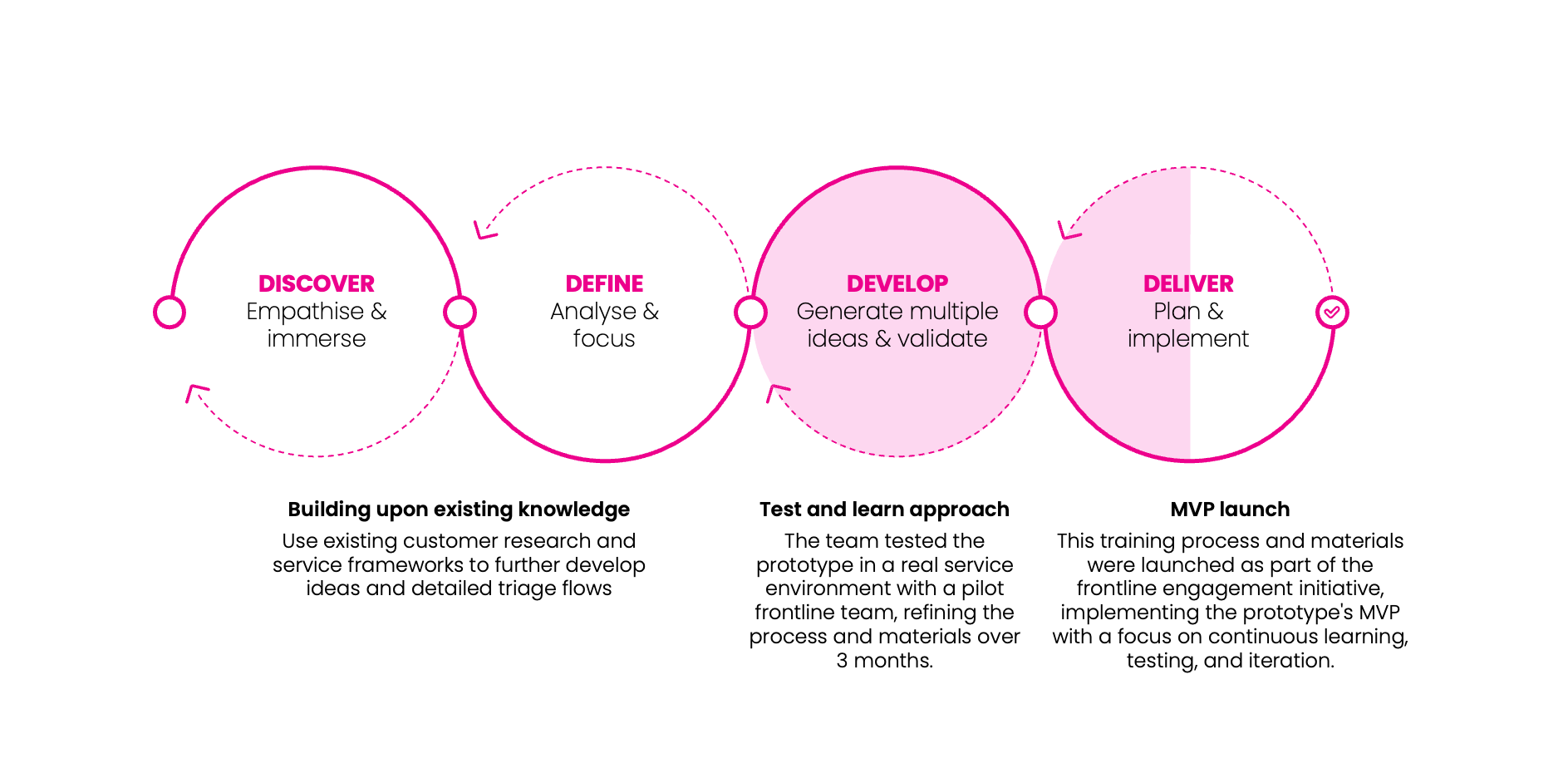
Project Timeline: 8 Months
Phase 1: Discovery & Definition (1 month)
Reviewed research on superannuation triage processes.
Mapped existing help pathways to identify gaps and leverage current frameworks.
Phase 2: Co-Design & Development (2 months)
Worked with frontline teams to design logic-based triage pathways by age, situation, and help preference.
Created a prototype, training materials, and conversation guides.
Phase 3: Pilot Testing (3 months)
Trialled Help Match in live service calls with trained frontline staff.
Embedded advisers for real-time support.
Integrated into the organisation’s customer interaction framework.
Phase 4: Full Implementation (2 months)
Refined the process based on pilot insights.
Developed email templates and knowledge management tools.
Rolled out across all frontline servicing teams.
Key Features & Deliverables
Comprehensive Help Offer Pathways
Structured into Guided Support (assisted by specialists) and Self-Service Options (digital and knowledge-based).
Member-facing descriptions to clearly outline available support options.
Interactive Triage Tool
Integrated within the organisation’s existing internal knowledge management system.
Designed to assist service representatives in quickly and accurately matching members with the right support.
Personalised Follow-Ups
Pre-set email templates for frontline teams to send members after a call, reinforcing their next steps.
Training & Support Materials
A structured training program, including e-learning and hands-on workshops.
Continuous knowledge-sharing among frontline teams to embed best practices.
Impact & Results
Enhanced Service Efficiency
Help Match is now embedded as a core triage process, significantly reducing unnecessary hand-offs between teams.
Members are directed to the right resources faster, improving response times and service accuracy.
Improved Member Experience
Customer Satisfaction (C-SAT) score increased within two months, from 8.5 to 9.1.
First Call Resolution (FCR) rate improved, from 86% to 88%.
Long-Term Scalability
The structured triage logic allows for future expansion, including integration with digital self-service tools.
The framework is adaptable to additional service areas, including retirement planning and financial literacy initiatives.